

Have you ever thought about how farming is quietly becoming smarter every day? Imagine walking into a classroom where students aren’t just reading about soil and crops but are actually monitoring how plants grow using real sensors and live data. Sounds fascinating, doesn’t it?
That is exactly where Edufarm steps in, bringing smart farming to the classroom.
As agriculture embraces data and technology, it’s changing how students learn about the environment, automation, and sustainability. Across colleges, engineering departments, and schools, learners are discovering that farming is no longer just about seeds and soil; it’s about systems, sensors, and science. Smart agriculture represents this shift, connecting observation with innovation to create efficient, eco-friendly farming models.
Integrating smart agriculture labs into classrooms through experiential learning
Do lessons in soil science stay confined to textbooks? Not anymore with practical exposure to smart farming. Students get to test, observe, and experiment; watching how every shift in light or temperature affects crops. This is what smart farming in education looks like.
By introducing systems like Edufarm, teachers help students understand that data is not just for computer science; it’s for the farm too. Learners begin to see how information and observation guide cultivation. They get to explore the logic behind precision agriculture, where decisions are made not by guesswork, but by measurement and evidence.
Instead of memorizing processes, they get to experience them. They watch water being distributed automatically when soil moisture drops, and they track how soil nutrients change over time. Suddenly, farming feels less abstract and more alive.
Edufarm smart agriculture lab: Hands-on learning with soil and sensor
So, what does a smart agriculture lab really look like? Think of Edufarm as a complete ecosystem in miniature, where soil, sensors and science meet.
To make this kind of experiential learning possible, Edufarm offers an integrated smart agriculture environment. It acts as a training lab setup that replicates soil-based farming conditions through a network of sensors and automation.
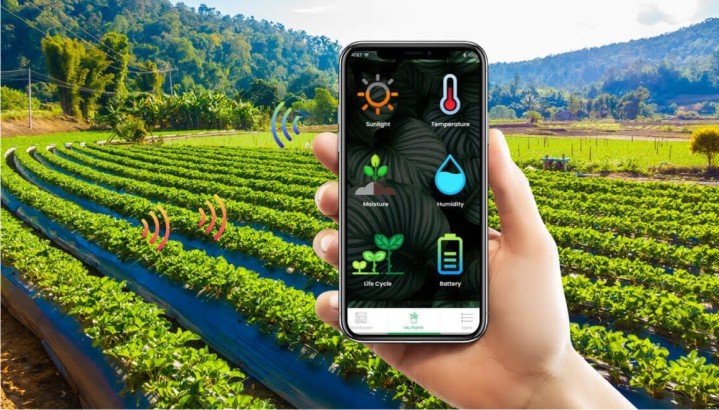
Students can observe and control parameters such as:
- Soil temperature, moisture, and humidity
- Light intensity and sunlight duration
- pH and water quality
- Nutrient levels such as NPK (Nitrogen, Phosphorus, Potassium) and TDS (Total Dissolved Solids)
Data from these sensors is displayed graphically, allowing learners to track changes, analyse patterns, and draw conclusions; skills that are essential for real-world farming decisions.
Edufarm also includes automated irrigation, where pumps activate based on moisture levels detected in the soil. This shows students how technology can help conserve water while maintaining optimal growth conditions.
It helps students connect environmental science with real agricultural practice. By experimenting with measurable data, they learn to make informed decisions about soil health, irrigation, and crop productivity.
Through this system, students can:
- Analyze how soil conditions impact plant health and yield
- Monitor and optimize irrigation automatically
- Understand how automation enhances resource efficiency
- Relate classroom data to actual field applications
The outcome is a deeper appreciation of farming as both a science and an evolving technology – one that requires observation, reasoning, and innovation.
Making smart farming practical for students
Edufarm was designed exactly to make institutions implement such systems. To help institutions deliver this kind of learning, Scientech Technologies developed Edufarm, a modular and interactive system for smart agriculture training. It integrates soil-based experimentation with real-time data visualization, helping students explore the environmental, technological, and sustainability aspects of modern farming. It is particularly valuable for:
- Agriculture colleges and universities, where students study crop science and soil management
- Engineering institutions with agriculture, automation, or IoT branches
- Schools, as part of STEM programs introducing students to sustainable technologies
By bridging data and design, Edufarm encourages learners to apply scientific methods to farming challenges; preparing them to become innovators, agri-technologists, and sustainability leaders.
Working with sensor-based systems is not just about collecting data but also doing it safely and correctly. It helps students learn about safety and precision. Some of the key lessons include:
- Regular calibration of sensors for reliable data
- Maintaining clean soil beds and irrigation systems to prevent contamination
- Handling electrical connections safely
- Recording and analyzing data systematically for accurate interpretation
These practices help learners build technical discipline and environmental awareness; two qualities essential to sustainable agriculture.
Applying smart agriculture skills from lab to real farms
What makes Edufarm meaningful is its real-world relevance. The same sensors used in the lab can be deployed in traditional farms to monitor soil health, improve irrigation efficiency, and increase yield.
By combining technology with environmental understanding, students see how smart agriculture can work in both urban and rural contexts; from academic research projects to small-scale farm operations. This exposure builds confidence to apply their knowledge beyond the classroom.
Future of agritech education
The future of agriculture lies in the ability to balance productivity with sustainability; and that begins with education. Edufarm provides students the tools to experiment, analyze, and innovate responsibly, transforming how farming is perceived and practiced.
Through this, earners discover that growing crops is no longer only about soil or seeds; it’s about insight, precision, and purpose. It’s about using data to make decisions that sustain both productivity and the planet.
Smart agriculture isn’t just about machines or sensors; it’s about nurturing the next generation of thinkers who will grow a sustainable future.
Let’s inspire curiosity in every learner. With the right tools and systems, students can experience agriculture not just as a subject; but as a solution for a sustainable future.
To know more about how smart agriculture learning systems can enhance your curriculum, visit Scientech Technologies.