


TL;DR
- This blog is designed for engineering students, diploma learners, manufacturing professionals, educators, training institutes, and academic institutions seeking Industry 4.0–ready education through a Cloud MES training system.
- Modern manufacturing education must move beyond theory and adopt digital, data-driven learning aligned with smart factory environments.
- A Cloud MES training system enables hands-on learning of real manufacturing workflows, performance monitoring, quality management, and decision-making without physical factory infrastructure.
- An Industrial MES learning platform bridges the gap between academic concepts and industrial practice by simulating real-world production, analytics, and role-based operations.
- Cloud MES learning platforms improve learning outcomes, support remote and hybrid education, strengthen industry-academia collaboration, and prepare learners with industry-ready manufacturing skills.
Manufacturing education is undergoing a radical transformation. As global industries rapidly adopt digitalization, automation, and data-driven decision-making, traditional classroom-based manufacturing education is no longer sufficient. Modern factories are becoming intelligent manufacturing environments where real-time information, system integration, and operational visibility are essential. To equip students and professionals for this reality, the learning institutions need to embrace the modern learning facilities that will reflect the real industrial systems.
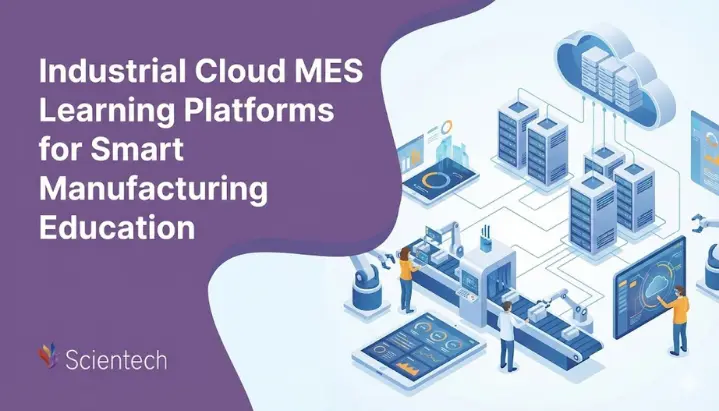
The Cloud MES training system is one of the most influential technologies that transform manufacturing education. Cloud-based Manufacturing Execution Systems (MES) allow learners to experience real-world production processes, performance monitoring, and decision-making. without being restricted by a physical infrastructure. These systems close the gap between theoretical and practical learning, helping develop a future-ready workforce through an Industrial MES learning platform.
Cloud MES learning platforms are redefining smart manufacturing education through their core features, key benefits, practical applications, and growing role in aligning academia with modern industry needs.
Also Read:
- Transforming Labs with Workbenches: Bringing Industrial Discipline to Education
- Developing Industry-Ready AI Skills Through Industry-Aligned Training
- Enabling Hands-On AI and ML Education with Development Platforms
Understanding Smart Manufacturing Education
Smart manufacturing education aims to equip students and professionals to operate in data-driven, digitally enabled manufacturing environments. It transcends the conventional theory of manufacturing by combining automation, data visibility in real-time, and decision making on a system level to the learning process. The goal is to acquire capabilities that are congruent with the reality of the way smart factories work today.
One of the most important facilitators of such an approach is the Cloud MES training system, which enables learners to understand how manufacturing operations are planned, executed, controlled, and optimized with the help of industry-standard digital tools. Using cloud-based access, students can have practical exposure to actual production workflows, performance metrics and quality management without investing in actual infrastructure in a factory.
An Industrial MES learning platform is a major pillar in smart manufacturing learning, as it bridges the gap between the theoretical and real-world use of such concepts as production planning, lean manufacturing, and quality control. Students engage with MES dashboards, work orders, and analytics products, which enable them to learn the importance of digital manufacturing systems in efficiency, traceability, and continuous improvement.
What Is a Cloud MES Training System?
A Cloud MES learning system is a cloud-based Manufacturing Execution System designed for education, training, and skill development in modern manufacturing. Unlike systems deployed on local servers, it is hosted on secure cloud infrastructure and accessed through a web browser and needs very little on-site hardware.
With the help of this system, students, instructors, and trainees can learn how real manufacturing operations are planned, implemented, monitored, and analyzed with the help of industry-relevant digital tools. A cloud MES learning system offers realistic experience with smart manufacturing operations and does not require the complexity of operating a real factory, as it is a reflection of the functionality of industrial MES software.
Cloud MES learning systems help bridge the gap between theoretical manufacturing education and practical industrial training through providing scalable access, real-time production simulations, and data-driven insights. Consequently, they have turned out to be a cornerstone of smart manufacturing education and Industry 4.0-based training programs.
Core Features of an Industrial Cloud MES Learning Platform
An effective industrial cloud MES learning platform has several features that simulate actual practices in the manufacturing process yet can be accessed by learners.
Production Planning and Work Order Management
Students learn how production plans are created, scheduled, and executed.Through the platform, they can issue work orders and allocate resources as well as monitor progress in real time. This helps learners understand how real-world manufacturing teams achieve production goals under constraints.
Real-Time Production Monitoring
Live production information such as output, cycle times, downtime and efficiency are illustrated in dashboards. Students acquire experience in interpreting the manufacturing data and knowing the ways the real-time visibility helps in controlling business operations.
Quality Management and Traceability
Quality modules show how digitally the inspection, tracking of defects and corrective measures are handled. Traceability capabilities demonstrate the way materials and processes are documented to be in line with compliance and quality assurance, which is a key requirement in current manufacturing.
Performance Analysis and OEE
With the help of performance analytics tools, the students are exposed to significant manufacturing measures, including OEE, productivity, and utilization. Through performance data, learners develop skills to identify bottlenecks, reduce waste, and improve efficiency.
Multi-User and Role-Based Access
Cloud MES learning systems accommodate several users who fulfill various roles, which include operators, supervisors, planners and managers. This role-based model assists the students in nderstanding differences in responsibilities and decision-making across manufacturing roles.
MES Learning Platforms Are Essential for Smart Manufacturing Education
Smart manufacturing is based on interconnected systems, real-time data and intelligent decision making. In order to be efficient in such environments, students should not only know the manufacturing processes; they should also know the digital systems which run the manufacturing processes.
An Industrial MES learning platform provides this insight through experiential learning that goes beyond textbooks and static lectures, which is not limited to textbooks and lifeless lectures.
Bridging the Gap Between Theory and Practice
Manufacturing students usually get taught concepts of lean manufacturing, production scheduling, quality management and performance metrics independently. Cloud MES platforms integrate these concepts into a single practical system, demonstrating how these concepts interrelate in real manufacturing environments.
As an example, students will be in a position to see how production delays affect delivery-related schedules, how quality concerns affect the overall equipment effectiveness (OEE), or how real-time data can be used to make decisions more quickly. This is an integrated approach that is essential to smart manufacturing education.
Aligning Education with Industry 4.0
The focus of Industry 4.0 is on automation, digitalization, and data transparency. Cloud MES training systems can teach learners about these principles through simulations of interconnected production environments, in which machines, operators and systems interact in a digital environment. Consequently, graduates will be more equipped to work in intelligent factories, in which MES is one of the main working systems.
How Cloud MES Training Systems Enhance Learning Outcomes
Implementing a Cloud MES training system significantly improves the quality and effectiveness of manufacturing education.
Hands-On, Experiential Learning
Students do not sit back and learn the concepts, but they are directly involved in the production situations. They develop plans of production, react to any disruptions, analyze data, and make decisions within the MES environment. This experiential learning approach results in deeper understanding and improved knowledge retention.
Exposure to Real Industrial Workflows
Cloud MES systems replicate real industrial processes so that students can have a glimpse of the processes in the industry even before they enter the workforce. This decreases the learning process of new employees and makes them immediately valuable to employers.
Support for Remote and Hybrid Education
The cloud MES systems are remote and hybrid friendly learning models since they are available online. With MES operations being practiced by students outside the conventional labs, manufacturing education will be more malleable and accommodating.
Improved Assessment and Skill Evaluation
Teachers are able to measure the performance of students using interaction with the systems, the quality of decision making and the results of analysis instead of using written tests. This skills-based test is closer to the actual manufacturing skills.
Benefits for Students and Learners
As a learner, there are a number of long term benefits associated with exposure to an Industrial MES learning platform.
Industry-Ready Skills
Upon graduating, the students will have a practical experience in operations of MES, data analysis, and digital manufacturing workflow. These are the much-desired skills in the manufacturing industries.
Stronger Conceptual Understanding
The simulation of the learning process in an imaginary industrial setting enables the learners to gain a more valuable and practical insight into the manufacturing principle concepts.
Enhanced Career Opportunities
The knowledge of cloud MES systems enhances the employment opportunities in the position of the production engineers, quality analysts, operations planners and digital manufacturing experts.
Role of Cloud MES in Industry–Academia Collaboration
The engagement of industries in academia is essential in ensuring that education remains in line with the changing industrial conditions. The training systems based on cloud MES are a typical platform of such cooperation.
Industries are able to offer actual situations, data, and examples that are used in institutions as part of MES-based training. Companies in turn access graduates who are already conversant with industrial digital systems. This partnership enhances internship programs, live projects and research programs.
Conclusion:
Smart manufacturing requires not only theoretical knowledge but also practical exposure to the digital systems behind modern factories.A Cloud MES training system provides this exposure through a cost-effective, scalable, and industry-relevant learning environment. As an Industrial MES learning platform, it allows the institutions to provide practical, real-world education that is ready to face the real-life issues in manufacturing.
Educational institutions can use cloud MES learning platforms to update the curriculum, increase learning outcomes, and improve industry relevance. These sites provide learners with an entry to industry-relevant skills and high-quality career opportunities. With manufacturing remaining in the digital transformation phase, cloud MES training systems will be used as part of the upcoming generation of intelligent manufacturing experts.
FAQs
A Cloud MES learning system is a cloud-based MES platform used for training and education that helps learners practice real manufacturing processes through a web browser without physical factory infrastructure.
An Industrial MES learning platform is ideal for engineering students, diploma learners, manufacturing professionals, academic institutions, training centers, and organizations preparing their workforce for smart manufacturing and Industry 4.0 environments.
A cloud MES learning system supports smart manufacturing education by providing hands-on experience with digital production planning, real-time monitoring, quality management, and performance analytics, helping learners understand how modern smart factories operate.
Key benefits include lower infrastructure costs, scalable access for multiple users, realistic production simulations, support for remote and hybrid learning, and exposure to industry-relevant manufacturing systems.
By working with an Industrial MES learning platform, students gain practical experience with industry-grade digital manufacturing tools, develop data-driven decision-making skills, and become better prepared for roles in smart manufacturing and Industry 4.0–driven industries.